
Putzmann's Destiny (Serialized)
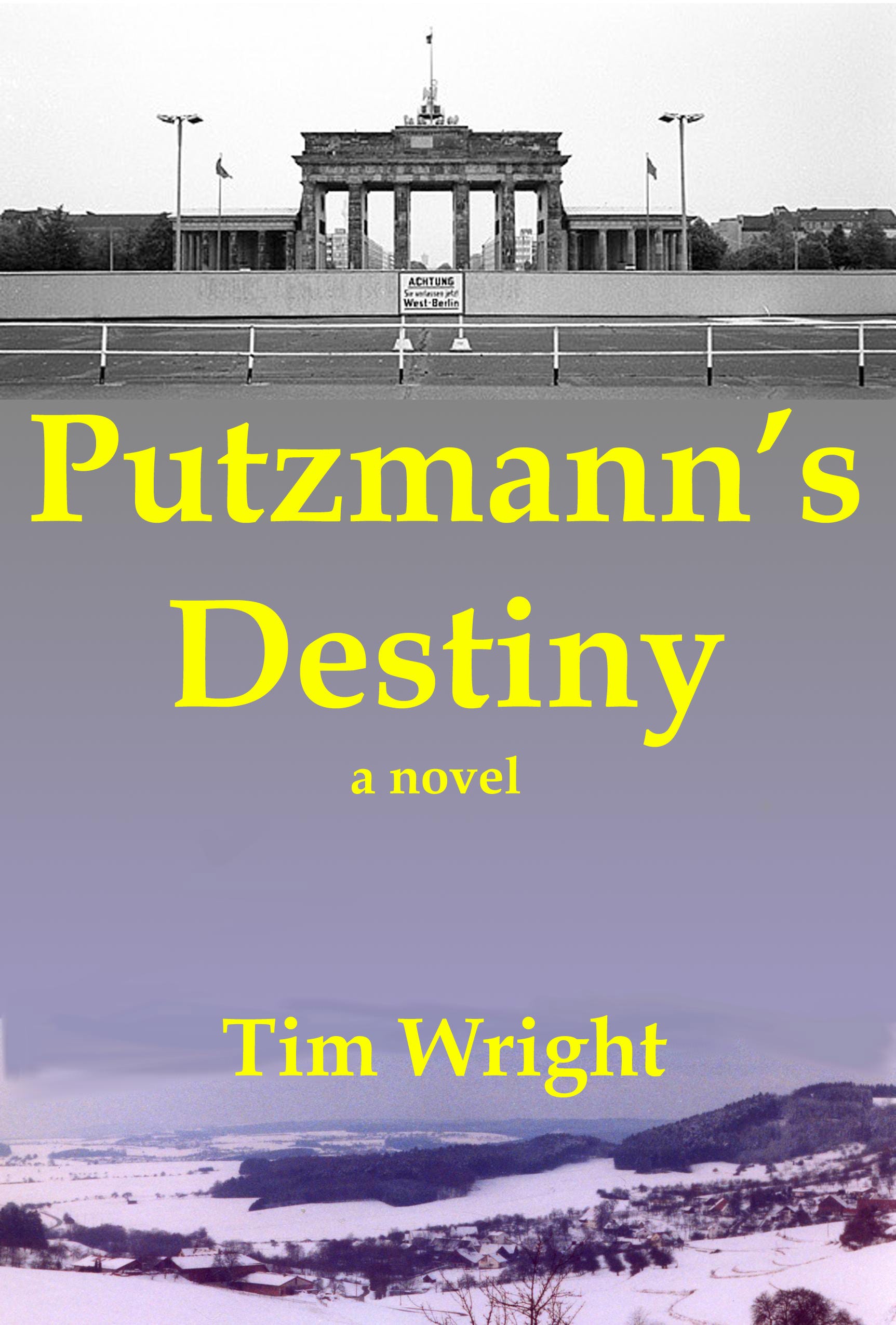
Investment banker Harald Putzmann, convinced he is destined for greatness, finds himself well-known for all the wrong reasons after losing 50 million of the bank's money in the 1991 S&L crisis. Starting over on an inherited farm, circumstances drag this city slicker kicking and screaming from Berlin's high life to rural living in distant Swabian Alb. Imagine the Wolf of Wall Street transplanted to Lickskillet, West Virginia. After encounters with incontinent crows, suspicious neighbors, a horny elf, and the girl next door, Putzmann achieves his destiny in ways he never could have imagined.
Originally published 2003 by the [now defunct] Blue Eagle Press. You’ll find it serialized here. A new chapter will appear each week. Click on the heading to read in a new tab.
Chapter 1 (Click here to read)
Berlin, February 1991. Senior portfolio manager Harald Putzmann has lost some 50 million of the bank’s money to bad investments in the S&L scandal. He’s fired, ending what once looked like a promising fifteen year career at Deutsche Bank, the only employer he’s had. Putzmann has always been convinced that he’s destined for greatness, but how does he reach greatness if he’s unemployed?
Chapter 2 (Click here to read)
Putzmann looks for a new job, but news of the bank’s loss in the newspapers and banking trade journals leave Putzmann well known for all the wrong reasons. After another frustrating day, he finds a letter in his mailbox with a Göppingen postmark. He’s into his third scotch before bringing himself to open it.
In Göppingen, a small city far to the southwest, attorney Horst Fischer has been searching for an heir to take the estate of the late Herrmann Linder, a widower farmer who died childless. His search led him to a distant third cousin named Putzmann, and he has sent several letters to Putzmanns in search of the heir.
A drunken Harald Puzmann calls Fischer and establishes his bona fides as heir. The conversation rambles as Fischer attempts to explain that Putzmann has inherited a farm.
Chapter 3 (Click here to read)
In rural Kummelsdorf, a farming hamlet near Göppingen, the farmers prepare for the new season. Whelping season has already started with new calves and piglets arriving already. Herrmann Linder’s farm has lain fallow for over a year.
A hung over Putzmann calls Fischer back to learn about his inherited farm, and sets a date to visit the property. Inspector Graumann of the Berlin PD and federal agent Metzger are investigating the Bank’s 50 million loss and suspect Putzmann embezzled it.
Putzmann flies to Stuttgart. This area is very different from Berlin, wide open spaces with mountains, and taxi drivers who take to the freeway light fighter pilots, “I’d hate it if you got us sucked into the next lane and killed.” Fischer meets him at the Göppingen train station, where Putzmann frightens a coffee shop waitress.
Fischer takes Putzmann to his inherited farm, more land than Putzmann can imagine, a sturdy house, and it’s all his, free and clear. A gathering with the new neighbors at Gasthof Meincke turns ugly as Putzmann speaks his mind, and the police arrive. This was just supposed to be a simple trip to see the property on the way to the probate judge.
Putzmann takes possession of the farm and registers the deed, thinking he can find a banking job in Stuttgart, but they know about him there as well, “Like bumping into Yassar Arafat on the bus.”
Contractors show up to paint Putzmann’s farmhouse, triggering gossip: Is he moving in? Putzmann returns to Berlin to book a moving van. On moving day, Graumann hauls Putzmann to the Berlin Jail.
The movers deliver Putmann’s furniture and the tongues start wagging. Released from jail for lack of evidence, he arrives in Kumelsdorf and the tensions rise.
Local Headhunter Schenck wrangles an invitation to a reception where all the upper crust of Göppingen’s businesses will be attending. The intent is to introduce the new stranger from Berlin around and find a job. Putzmann, true to form finds a new way to put his foot in his mouth.
Putzmann encounters his neighbors’ homemade speed bump the hard way on the drive to a job interview. Petroleum wholesaler Steiner wants to use Putzmann’s skills in an unexpected way.
Fertilizing time, and Putzmann evades the speed bump, only to discover just how slippery liquefied manure can be. Meanwhile federal cop Metzger reminds Putzmann that his agricultural tax exemption would be fraudulant if he doesn’t start planting something.
Putzmann decides to grow eggplant and keep his agricultural tax exemption because he likes Italian food. Nevermind that Germany’s climate and soil is all wrong.
All the rocks Putzmann cleared from his eggplant patch have mysteriously returned to his fields. Naturally he blames his neighbors until he sees for himself what happened in the dead of night.
Putzmann decides to fight fire with fire, concerning supernatural events, and studies conjures and incantations at the library. He also discovers the Hohenstaufenstrasse, a country road where he can speed. He attempts to exorcise his fields with incantations. The crows do not approve, and they show it in a novel way.
Kirsch and Krantz witness what the crows do to Putzmann, and they discuss other supernatural events in the valley in Putzmann’s dining room over whisky. Kirsch convinces Putzmann to plant barley, easy to grow and a moneymaker. While plowing for his barley patch, Putzmann eyes the forested hillside at the edge of his property, a perfect place to put in a vineyard, or is it?
The state government won’t let Putzmann clear cut his forest, because it’s a conservation area. He blows off steam by driving too fast on the Hohenstaufenstrasse and discovers that driving over swarms of toads is just as slippery as driving over spilled manure.
Putzmann considers staging his own Act of God to clear his forest with a convenient fire. Freya, a lascivious elf pays him a visit to change his mind, and Putzmann spends a night in jail.
Kirsch picks up Putzmann from the jail the following day. He recognizes the flower garland that Freya gave Putzmann and launches into his own tale of an encounter with the elf. At first Putzmann does not believe.
Kirsch takes them to the whorehouse for a nooner. Afterward, Kirsch treats Putzmann to lunch, and a friendship begins.
Putzmann’s crops are growing, and seeing this turns his mind away from banking to the living things he put in his land. Friend Bodo from Berlin calls with an update, but Putzmann doesn’t want to burn his forest, not after Freya. Kirsch starts taking him along to church.
“I haven’t been to church in years.” Putzmann crossed his
arms. “Why should I start now?”
“Haven’t been laid in years either, but that didn’t stop you
from visiting the whorehouse.” Kirsch looked him in the eye.
“You have a point,” Putzmann replied.
Putzmann attends his crops as summer progresses. The bank fraud investigation is closed, and he’s forgetting life as a banker, having acquired some chickens and a milk cow. The eggplant is actually growing. Krantz returns from a pig breeder’s convention, where his breeding stock has won awards. Putzmann visits Krantz’ pig farm and sees differently: Krantz was no longer the oaf who sabotaged the road with a speed bump, or the wild man shouting epithets about slowing down, or even the oddball taking his hog out for a walk on a leash. Krantz was becoming a fellow businessman in Putzmann’s eyes.
The crows still don’t like Putzmann and make it known in their own special way.
Heidi, Maria’s recently divorced daughter has moved back to Kummelsdorf. Putzmann spots her during church services, and they can’t keep their eyes off each other. Heidi announces that she’s cooking a big Sunday supper at Maria’s apartment and both Kirsch and Putzmann are coming. Bur first she has to get Putzmann down from the tree he climbed.
Putzmann meets Heidi’s two young sons, six-year-old Didi and Günther, eight. As a Sunday feast goes on above the table, below Putzmann and Heidi engage in olympic class footsie.
After supper Putzmann and Heidi take a long walk though the countryside, each telling their life stories. Heidi is starting over after her divorce, same as Putzmann starting over after the bank disaster. She’ll take over the land that Maria leased out and run the old farm. What started as simple attraction begins growing into chemistry as they begin to know each other.
High summer, and the heat is no fun. Krantz’ pigs are uneasy, the kids are cranky, and the farmers are sweating up a storm. Putzmann steps outside into a hailstorm: “It’s just raining icewater.” Hog cholera breaks out in Krantz’ herd, and half of his pigs must be destroyed to stop the outbreak. The neighboring farmers pitch in to clean up and businessman Putzmann realizes that this could ruin Krantz.
Putzmann shows up at Krantz’ farm to overhaul his finances before going to the bank. “I know accountants and bankers can be a bunch of cold blooded bastards, but today’s going to be different.” He held up a finger. “This cold-blooded bastard’s on your side.” At Krantz’ S&L, Putzmann takes over negotiating a line of credit to see Krantz through this setback, working his way up from loan officer to negotiating with the branch president. Using his old skills, he gets better terms than Krantz could imagine.
Heidi moves from her mother’s apartment to Kirsch’s farmhouse, cleaning it with a vengeance. Putzmann mentions a concert in town, and the next thing he knows, Heidi has turned it into a date. During the concert they miss out on most of the music, because they’re making out like teenagers in the back row.
Putzmann now sits with Heidi and her boys at church, looking a lot like a family. Maria tells Kirsch that she’s never seen Heidi so happy. One Sunday afternoon Putzmann’s old Berlin friends, Bodo and Franz show up in a stolen car. They’re “on vacation” and want to stay with Putzmann. Heidi is jealous and beats beefy Franz at arm wrestling.
Putzmann takes his Berlin buddies out to a night on the town in Göppingen, bar hopping until Franz gets tasered. Putzmann is still Harald The Banker in their eyes, but he has to get up at four to work his crops. Meanwhile, Heidi is hopping mad and jealous.
Bodo and Franz are wearing out their welcome, not appreciating the work Putzmann has to do on the farm and not helping. On the way to town for more insecticide, Putzmann and Krantz see a column of smoke rising over Putzmann’s land and rush back to call the fire department on Putzmann’s phone. Franz has set fire to the woods, and a big thunderstorm is brewing. The storm extinguishes the small fire as Bodo and Franz emerge. They had encountered a very pissed-off Freya and are scared to death.
Heidi, Kirsch and the boys see pictures of Bodo and Franz on a TV true crime show, wanted for a warehouse burglary in Berlin. The boys jot down the number for the tip line.
While Heidi shops at the local Edeka market, the boys beg for change to buy candy. Instead they go to the payphone out front to call in their tip about Bodo and Franz. This leads to the local cops arriving and Bodo and Franz’ Most Excellent Arrest.
Harvest time approaches. The barley goes first, then the beets and cabbage. Putzmann almost forgets to harvest his eggplant. He cooks eggplant napoli for Heidi and the boys. It smells too much like pizza to fail. Heidi and the boys invite Putzmann to the Canstatter Volksfest next week. A lot like Oktoberfest, but without the foreign tourists.
The Kummelsdorf farmers take the train from Göppingen to the fair near Stuttgart. Growing up poor, Putzmann had never gone to anything like this. The livestock shows and the rides are all new to him. Later, he uses his Berlin street smarts to rescue Klaus from a mugging. Failing to win the boys a prize game booth, Heidi steps in to show him how it’s done.
November, and the harvest is in. Putzmann is invited to join the stammtisch at Meincke’s, the table reserved for regulars, and he, Kirsch and Krantz address each other in the familiar, by first names. Kirsch and Krantz tell Putzmann that he’s been good for Heidi and drop hints at marriage.
Late November Putzmann helps Krantz stage a surprise birthday party for his wife, Charlotte. As Heidi helps with preparing dinner, she confesses her love for Putzmann, but he’s unsure what love is and doesn’t know what to say. He doesn’t want to lose Heidi and her boys. The children organize a game of hide-and-seek in Putzmann’s woods as snow begins falling. Just as the party begins, Johann bursts in and interrupts. Didi is lost in the woods.
The men and Maria search the woods for Didi. The snow is heavier, the temperature dropping, and Putzmann is determined to find the lost boy as night falls. Kirsch finds Didi in a hollow tree, and they return safe. Meanwhile, Putzmann slips and falls down a ravine. The neighbors are happy to find Didi, but now it’s Putzmann who’s lost, and the search shifts gears. Putzmann wakes to find himself sitting opposite a campfire and a wizened old man who looks vaguely familiar.
More local farmers join the search for Putzmann. Sunset has come and gone, and the snow is falling harder. The wizened old man talks with Putzmann, posing questions that leads Putzmann to understand that he loves Didi like a son. That’s what love looks like. He loves Heidi as well but hadn’t recognized it. The old man points out that his destiny for greatness is on the farm with neighbors, not in business. It’s time to go home. Follow the glare of Göppingen’s streetlights reflecting off the bottoms of the low clouds. Eichbaum finds Putzmann and brings him to the farmhouse.
After a bath, Heidi puts the semiconscious Putzmann to bed. He dreams events from his youth through losing his job at the bank. He’s back in the woods, following the reflected glow off the bottoms of the clouds, only to see that he’s hopelessly lost. Heidi appears in the dream to give lifesaving warmth.
Putzmann wakes in the morning to see a sleeping Heidi next to him in bed, wearing his PJs. She wakes, and Putzmann tells her he loves her and proposes.
Fischer, now volunteering with a service to help former East Germans find new careers and settle, takes former lignite miner Georg Kalb to Gasthof Meinke. Kalb is leasing Maria’s land and starting over as a farmer. Fischer introduces him to the farmers at the stammtisch. Kalb has his doubts, and Fischer tells him about Putzmann.
Here it is, top to bottom. Come back and read.