
The Informer
This is the short story that became the opening to IN THE WEST, 5400 words

Margot's mouth had gone dry ever since the cop and his plain clothes superior had pulled her off the street and drove her to this anonymous-looking building near downtown Dresden. The policeman wasn't Vopos, people's police, an ordinary cop, but MfS, the Ministry for State Security, Stasi, as well as his superior. They rode a circuitous route into downtown, Margot in the back seat, kneading her hands in her lap as the car passed by the ruins of the Frauenkirche before crossing the Carolabrücke over the Elbe River and taking an alley to park in a yard behind an anonymous-looking gray stone building. Everybody knew about this building but never named it or talked about the gray stone structure two blocks away from the Elbe. Some of the people taken here never came back.
The uniformed State Security cop and the plain clothes man wordlessly walked Margot through a warren of corridors before stopping at an unmarked door and the uniformed officer directed her to a chair inside. Despite the cool air of early spring she felt sweat gather in her armpits and on her scalp. Her pulse throbbed in her temples, and she couldn't get enough oxygen, no matter how deep she drew breath. The room was an office, not much bigger than her own cramped bedroom in the concrete plattenbau apartment she shared with her husband and two sons. He pointed at the wooden chair. “Sit.”
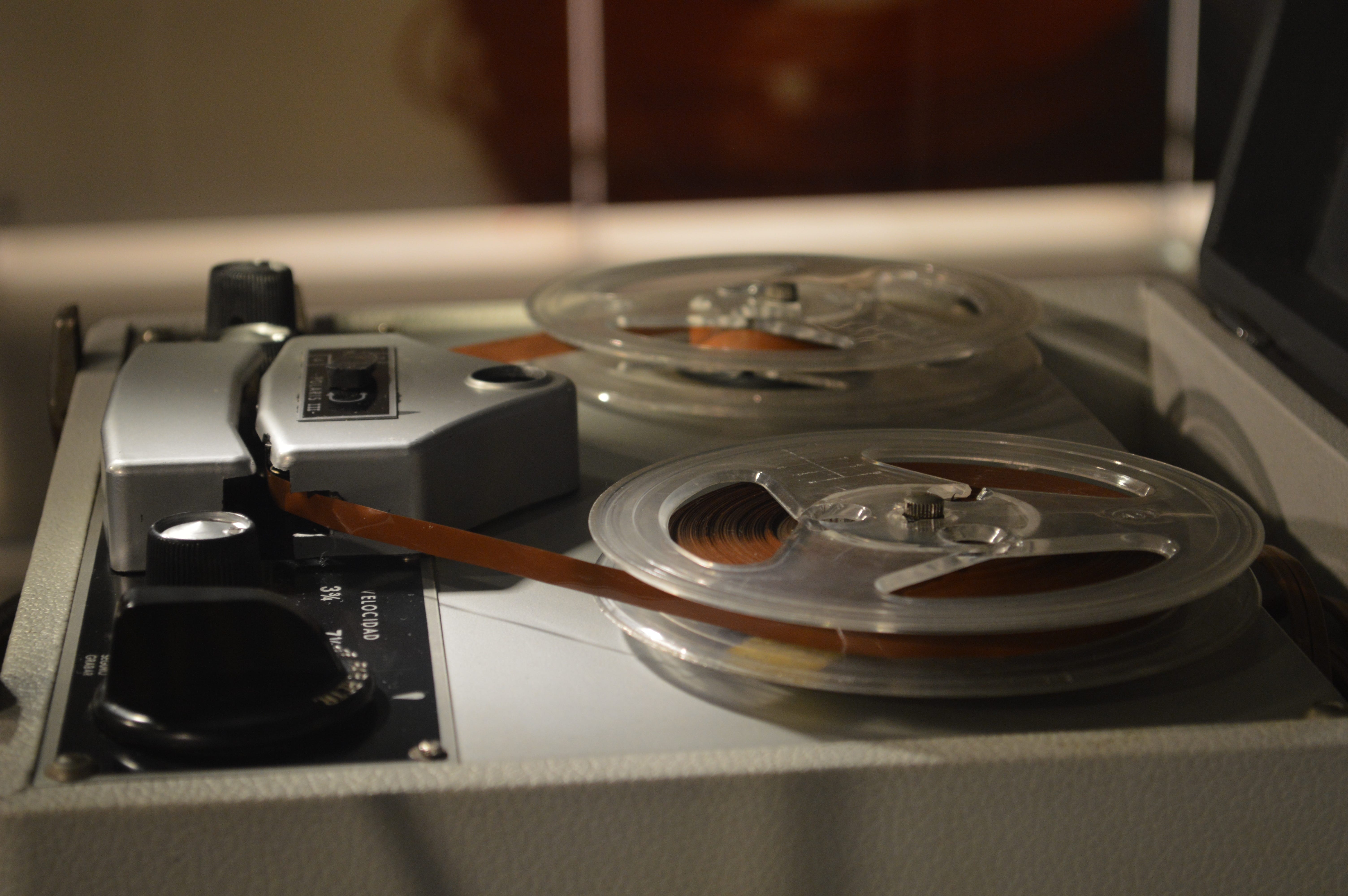
She sat in the plain wooden chair in front of an equally plain metal desk. Behind the desk sat an older man, probably in his forties from the gray showing around the edges of his close-cropped haircut. He wore a dark blue suit that looked far more expensive than anything her husband Emil could afford. The only light in the room came from an overhead fluorescent lamp that cast a harsh glow and gave off a low hum. The light glinted off the metal body of a reel to reel tape recorder and a telephone.
The plain clothes man set her paper bag on the desk. He had taken it from her after identifying himself as State Security Police – Stasi.
The man behind the desk glanced at the paper bag, then looked up. “I'll call when I need you, Rudolf.” The overhead lamp left his deep set eyes in shadow, as if they were holes in his face.
Rudolf nodded and stepped out behind the uniformed policeman, closing the door.
“No doubt you want to know why you're here, Frau Kröger?” The man opened the bag and lifted out the eggs. Eight of them stood in the cups of a pasteboard carton, and he handled it as if it contained nitroglycerin.
Margot had felt good about the eggs. Eggs had been so hard to find lately, and the stores just didn't have any for over two weeks. Whenever any came in, they got snatched up before she could get to the market on the way home from work. Now she had enough for her family, enough to bake that quiche she had promised Emil for their anniversary celebration. Neither of her two young sons had ever tasted quiche, and they had been looking forward to the treat.
“Yes.” Her voice came out as little more than a whisper. “Why am I here?” She glanced around the room, not knowing when or if she would leave the building. The desk and chair were the room's only furnishings, not even a file cabinet or bulletin board on the pale green walls, only a single framed portrait of Erich Honecker, the SED party chairman and head of state with his tiny eyes behind large glasses. Standard issue for any government building. What would the Stasi want with her, a clerk and parts runner for a machine shop?
The man flipped a knob on the tape recorder, and the reels began turning. He slid a microphone on a short stand to the middle of the desk. “Today is the sixth of April, nineteen eighty-one. Agent Knauff is interrogating Margot Kröger.” His eyes shifted from the tape recorder to her face. “Do you understand that you have committed a crime against the people?”
Margot stopped breathing. A crime?
Knauff placed the eggs at the center of the desk. “These eggs are state property that you have unlawfully obtained.” He stared at her, waiting.
Eggs? State property? All Margot wanted to do was bake her husband and children a quiche to celebrate their anniversary.
“You obtained these eggs from a Heinz Reinke, a member of a collective farm today at 2:38 PM.” He glanced at his notes, then resumed staring at her.
“I didn't know his last name.” She wondered how the Stasi could be watching as she stopped at the farmhouse between delivering a load to Schuler and picking up the screws and washers at Hosslinger Supply.
“We do.” Knauff's eyes bored into her face. “It's our duty to know everything. We know that you drove a company vehicle, the truck, to the farmhouse at 2:34 PM and took possession of the eggs at 2:38. You paid Reinke seven marks and fifty pfennig, then you proceeded to Hosslinger Industrial Supply.” He glanced down at his notepad. “There at 2:47 PM you picked up a load of three hundred steel washers, size six millimeters and eight hundred stainless steel six millimeter screws.”
Her breath caught in her throat. She remembered signing off the invoice for those amounts but had no idea that somebody was watching.
“Reinke is already in custody for selling state property. He will never again steal eggs from his collective farm.” Knauff peered at her. “The question remains: what to do with you?”
“I'm sorry.” She lowered her eyes. How could buying a few eggs be a crime big enough to bring the attention of the Stasi?
“I'm sure you are.” He folded his hands. “But there's still the violation of the law. Reinke stole eggs from the farm and sold them to you. You purchased goods stolen from the State, perhaps to re-sell them for a profit.”
“I'm no black marketeer.” She looked at Knauff. She had found eggs when the market didn't have any, to cook them into a quiche for her family.
“You purchased fourteen eggs from Reinke, and there are only eight here in your possession when we apprehended you.” He leaned forward. “Where did the other six go?”
Margot's throat went dry. “I gave them away.”
“You did not sell them?” he replied before her last word left her mouth.
“Herr Knauff, I did not sell the six eggs.” Her eyes met his. She was no criminal and resented being cast as one. “I gave them to friends who were also frustrated over not being able to buy them at the market.”
“Who are these friends?” He lifted his pencil.
“Don't you know already?” She felt angry. The markets had been short on eggs, something basic and fundamental. “You already know how many I bought.”
Knauff's eyes narrowed and he gripped his pencil. “Don't toy with me, Frau Kröger, because you are facing a potential prison sentence. The penalty for trafficking in stolen state property is three years. In the meantime, your children, your two sons could lose their slots in school, and your husband, a plumber who works for the city, could lose his job. The state owns your apartment and could take it back at any time. All of your family could be out on the street.” He stared at her and waited for a response.
“I gave them away.” She met his eyes, not a criminal. “For free.”

He jotted notes. “To whom?”
She didn't want to name names. After finding a source of eggs, when the market had none, she shared her good fortune with a couple of friends by giving them what they had been seeking for so long.
“I need to know.” Knauff's eyes rose from his pencil to meet hers.
She stared back and remained silent, watching the reels turn on the tape recorder.
“Perhaps we should bring your husband in for questioning.” His grip on the pencil tightened. “With both of you incarcerated, your children will go into foster care. I don't know when you would see them again.”
He breath caught in her throat. The State would take her children away? Over six eggs? Eggs? This wasn’t like she had talked to Western journalists dug a tunnel under the border.
Knauff reached out to pick up the telephone. He pressed a button and put the receiver to his ear. “Arrest Emil Kröger, a plumber with the city, and bring him in for interrogation.” He continued to stare at Margot as he waited. “Yes, and send somebody to pick up his children, Ernst and Johann Kröger at – “
“Lisl Schmitt,” she barked, anything to interrupt him.
“Moment,” he said into the telephone, then turned his attention to her. “Who is Frau Schmitt?”
“I gave her four eggs.” Margot's eyes bounced between his and the telephone receiver in his hand.
Knauff wrote something on the pad, then looked up at her. “And the other two eggs?”
“Charlotte Braunschweiger.” Margot covered her face with her hands.
“Cancel that. We won't need Herr Kröger after all,” he said into the telephone and hung up, his eyes still watching her.
She gazed at the telephone, as if to verify that he had canceled the order to arrest her husband. Sweat dried on her forehead.
“You gave four eggs to Lisl Schmitt and two to Charlotte Braunschweiger, yes?” His pencil stood ready at the pad.
“Yes.” She covered her face again, wondering if her admission would send the Stasi to visit her friends.
“They didn't pay you?”
“No. I gave them away for free.” She sat up straight in the chair and met his eyes. “I'm no black marketeer.”
“How do you know these two women?” He jotted a note.
“One is a colleague at the metal shop. The other is a neighbor.”
“Frau Schmitt is your neighbor across the hall, yes?” He glanced up from his notes. “And Frau Braunschweiger is bookkeeper at Hellerauer Maschinenbau.”
Magot nodded. How did he know that?
Knauff wrote more notes, the pencil scratching across paper. “Why did you give them eggs for free?” His voice came out low and calm, musing, and his eyes stayed on the notepad.
“They are my friends.” Lisl as close as a sister, and Charlotte the only other woman in the shop.
Knauff raised his head and looked her in the eye as if she had told a lie and waited.
“Charlotte wanted to bake a cake, and Lisl wanted to cook omelets for her family on Easter Sunday.” Margot worried that her friends might end up in this office.
“They did not ask you to obtain these eggs?” He held his gaze.
“No.” She shook her head. “I knew they needed eggs, and when I found some, I shared the good fortune.” She pressed her lips together. “I am no black marketeer.” He jaw muscles tightened, and she willed her voice not to rise.
“Stolen State property.” He raised his pencil. “Reinke has been doing this for while, stealing food from the mouths of the people to line his pockets.” He nodded. “The man will spend considerable time in prison for this.” He dropped the pencil on the pad and leaned back in his chair. “The question remains: what shall we do with you, Frau Kröger?” He stared at her.
“I didn't know.” She met his eyes, holding her indignation in check. Since when was the State so concerned over eggs?
He tipped his head to the side. “You obtained eggs from a source that was not a State sanctioned market. Surely, you must know that was unlawful.”
“I know now. I thought the purchase was like that at the Farmer's Market Saturday mornings on the Schillerplatz.” She had learned about the eggs there from a farmer selling produce.
“I can still send you away to prison for three years.” Knauff reached for the pencil and tapped the eraser end on the egg carton. “We caught you red-handed with stolen State property.” His eyes met hers. “And you were driving a company truck on company time to obtain them. You stole resources from the people, the petrol to fuel the truck, and the time to make the transaction.”
“I met Reinke between two stops on my route.” She met his gaze. “It didn't cost a drop of fuel, and it only took me minutes to pick up the eggs. I spend twice as much time waiting for the traffic lights on my route.”
“And distributing eggs to your friends?” Knauff arched an eyebrow.
“I gave eggs to Charlotte at the end of my shift, and I left Lisl's with her on my way to my apartment, not on company time.”
He jotted more notes, glancing at her as he wrote. He looked down at the pad and waited.
She sat still, shoulders squared, waiting him out as the reels on the tape recorder turned.
“Your supervisor says good things about you. Herr Mustermann told us that you are very hard working and efficient.” Knauff looked up from his notes.
She nodded, thankful that her supervisor had praised her when questioned by the Stasi.
“But still, you violated the law, and we must do something about it.” He pointed the pencil at her.
Her stomach clenched. It looked like there was no walking out of here. The Stasi was ready to send her to prison over fourteen eggs.
“Do you know of other farmers who sell directly to people?”
“I don't understand.” She blinked and wondered what kind of punishment Knauff wanted to mete out.
“Reinke sold you eggs. Do you know of other farmers who sell things like vegetables, meat, eggs to people the way Reinke did?” Knauff held his pencil at the ready.
“Yes.” She believed that she needed to be very careful with her words. None of her friends were going to go through this, if she could help it.
“That knowledge is valuable to us. While housewives like you violate the law, buying stolen products from collective farms, it is the black marketeers like Reinke that are the State's bigger concern.” Knauff looked up from his writing pad at her. “Do you follow my reasoning, Frau Kröger?”
“Yes.”
He tore his page of notes from the writing pad, then handed the pad and pencil to her. “You will write down the names of these farmers and what they sell.”
She took the pad and pencil, the palms of her hands slick with sweat.
“Take all the time you need.” He leaned back in his chair and waited.
She wrote the name Herbert Gotz, and that he sold cabbages from the back of his truck to neighbors. Her hands had gone sweaty, and keeping a firm grip on the pencil proved difficult. Next, she jotted Didi Brunner, who worked in a slaughterhouse and sold sausage when the market didn't have any. That was a long time ago, at least a year, but if writing this down let her see her husband and children again, she would do it.
Knauff watched her and silently took the pad and pencil when she extended it to him. Without a word he set them down and studied what she wrote. “Very good, Frau Kröger.” He touched his fingers together, then meshed his hands. “Your cooperation is appreciated.” He looked at her and waited.
“Thank you.” She didn't know what else to say.
“Although you violated the law, you have provided a valued service to the State.” He tapped the notepad. “Because of this, you are no longer a suspect, but an associate instead.” He gazed at her. “Do you understand?”
She looked back at him. He only wanted information?
“Do you want to go home to your husband and children?” Knauff raised his eyebrows.
“Of course.” Returning to her cramped apartment, one of hundreds in an anonymous concrete plattenbau, was the thing she wanted.
“As long as I can rely on you to provide information like this, and you are as hard working for me as you have been for Mustermann, you may go about your life without any more meetings like this afternoon's.”
She nodded.
“Do you agree?”
“Yes.” She glanced at the turning reels.
Knauff turned off the tape recorder, leaned back in his chair, and pulled a page from the desk’s side drawer. He slid it to her and handed her a pen. “This is an agreement between you and the Ministry for Security, that you will provide valuable information and we will leave you to lead your life as you like.”
Margot read through the text. It stated that she would regularly provide information of what she saw or heard as an unofficial member of state security. In exchange, all pending charges against her are suspended.
“Sign it, and you can go home.” Knauff meshed his fingers.
Margot wanted to go home and forget that any of this ever happened. She didn’t see anything overtly threatening in the document and put her name to paper. She slid it and the pen back to Knauff.
He nodded approval, countersigned the page, pressed a rubber stamp to the bottom, and dropped the page back into the desk drawer. Knauff pressed a button on the telephone.
The door opened and the plainclothes Stasi man entered.
“Rudolf, take Frau Kröger home.” He pulled a business card from inside his jacket and tucked it in the egg carton. He put the eggs back in the paper bag and slid it toward her. “Take the eggs with my blessing. You've earned them, and you'll soon see other rewards.”
She stared at the bag. It had gotten her into this place and a lot of trouble. She wasn't sure if she really wanted the eggs any more.
“Please take them.” His face softened as if ready to smile. “They're yours.”
She reached out and grasped the rolled-up top of the paper sack, then stood. Her legs felt as if they might buckle and drop her back into the chair.
“You may go, Frau Kröger. Rudolf will drive you home.”
Rudolf held the door open and gestured for her to leave.
“I expect to hear from you soon.” He leaned back on his chair. “You have seen and heard things that we deem important, even if they seem trivial to you. Good day, Frau Kröger.”
Rudolf touched her elbow, and she stepped out of the office as if the contact had jolted her. Rudolf pulled the door shut behind them and led the way down the corridor.

A week later, Margot received a telephone call at work. She was on the dock, nailing lids onto crates for a rush shipment to Heinemann Instruments that was supposed to go yesterday. Mustermann told her to pick up the phone in his office as he walked onto the shop floor.
“It's been seven days since we last spoke, Frau Kröger.” Knauff's voice had the same all-business tone. “I hope you haven't forgotten me.”
“No.” Her grip tightened on the receiver. She wished that the episode with the eggs had faded into distant history, like tales from the Thirty Years War.
“Very good. Have you any observations to pass along? Anything since you bought eggs from Reinke?”
Her palms felt clammy. Knauff would not be satisfied until she gave him information on her neighbors and co-workers. He would not go away.
“Are you still there, Frau Kröger?” Knauff's voice pressed, drilling into her ear.
“Harald Kurtz.” Her eyes focused on a point in space ten kilometers away from Mustermann's tiny office. “His son is not happy and is looking for a way to leave for the West.”
“And the son's name?” The sounds of pencil scratching whispered over the line.
“Anton, I believe.” She wasn't sure of any of this, but she had to give Knauff something, anything to make him go away.
“This is the same Kurtz who works a lathe there?”
“Yes.” She twitched. Why did Knauff recognize the name so quickly?
“Very good. I'll look into this right away.” Knauff maintained his all-business voice. “I gave you my card, and I expect our next conversation to be a call from you, sooner than a week.”
“It depends on what I see and hear.” Her jaw muscles tensed.
“Of course. I expect you to be very observant.” Knauff hung up.
Margot stared through the wall for a moment longer, then set the receiver into its cradle, slowly, as if it would break. She wanted to take a shower, wash and feel clean again. She had to settle for taking the company truck out for another parts run, running the rush delivery to Heinemann Instruments.
That evening, after the boys were in bed, Margot dropped onto the sofa and held her head in her hands. The furniture was a hand-me-down from her parents, the upholstery stiff with age and the springs in the seats loose. In the summer it smelled of skin and sweat.
“What's wrong?” Emil sat next to her and rubbed the back of her neck. After last week’s visit to the hairdresser, her hair ran just short of collar length and showed its waviness.
“I got a call at work from Knauff, the Stasi man.” She turned to face her husband. “He was looking for information.”
Emil chewed at his walrus mustache. “What did you tell him?”
“I mentioned Harald Kurtz.”
Emil's face relaxed. “The old fussbudget?”
She nodded. “I had to tell the man something. I told him Kurtz's son was looking to escape to the West.”
“Is he?” Emil’s eyebrows rose as he smiled.
“I don't know, but if his father treats him as shabbily as he treats the rest of us at work, escaping to the West might look like a good idea.” Margot tucked her hair behind her ear.
Emil chuckled and scratched at his scalp, his curly hair, as long as hers and just a little darker, needed a trim and stood out like a bush.
“It gave me no pleasure to give his name to the Stasi, and they seem to know something about him already. This Knauff man wants me to inform on what I see. I only mentioned Kurtz because he'd be the last person anybody would miss in the shop.” She leaned forward and rested her elbows on her knees.
Emil got up and returned with two half liter bottles of Radeberger beer. He handed one to her. “When will he call again?” Emil settled into the couch next to her. They stood the same height and occasionally shared work clothes, depending on what needed laundering, but Emil had the larger shoe size.
“Knauff expects me to call him inside of a week with more information.” She looked at Emil. “What will I tell him?”
Emil swallowed beer and put his bottle down. His eyes shined a bright blue in contrast to his near-black hair and mustache, olive gypsy complexion.
“You remember what I told you about the day they picked me up.” She tipped her beer and took a swig. “I don't know if he really has the power to lock up both of us in prison and take the boys away, but I don't want to test it.”
Emil reached his arm out and drew her to his chest. “We'll think of something.”
“Knauff wants me to inform on our friends and neighbors.” Her voice had a hitch. “I don't think I can do it.”
“Shh.” Emil kissed the top of her head.
“He wants names.” She tilted her head up to look at him.
“Willi Kringiel.”
“Who?” Her brow furrowed.
Emil reached for his beer and took a swallow. “A mechanic in the city motor pool. He pilfers tools and engine parts to sell to friends.”
“You'd turn in a friend?”
“He's not my friend.” Emil looked at her. “When my van had problems, he asked for a bribe just to do his damned job and look at the motor.” He stroked the back of her head. “The guy's stealing from the city, and if the Stasi wants another name, give them Kringiel.”
She looked him in the eye. You sure?”
“Nobody's going to miss Willi Kringiel, just like they won't miss Harald Kurtz. I know Kringiel is stealing. We all know in the shop, even the foreman, but it's small stuff. Doesn't seem to be worth the trouble.”
“Until now.” Margot tilted her face away from Emil.
“If the Stasi wants to hound a man for pilfering spark plugs, I guess they can.” Emil smiled.
“They hounded me over fourteen goddamned eggs.” Her voice hardened at the memory of the interrogation. “It's nothing to joke about.” She waited for Emil's smile to fade. “Even if Knauff can't put me in prison over the eggs, I'm sure he can make life very difficult.”
Emil nodded, his expression sober.
“He wants names, every week. If I don't call him, he calls me.” Taking his call at work felt hard enough. Next time he could show up at the apartment door.
Emil tipped his beer and took another swig. “One name at a time good enough for him?”
“Seems that way. It satisfied him today.” She rested her head on his chest. “What am I going to do?”
“Give him Kringiel next week.”
“And the week after?” She raised her head to look at him.
“How long will this go on?” Emil wiped his mustache.
“I don't know. It's like I've sold my soul.” She rested her head on his chest again.
Emil squeezed her. “We can't know everything, and Knauff has to know that we can't give him fifty-two names a year.”
“We? I was the one the Stasi picked up.” She looked up at him.
“You're my wife. We're in this together.” He kissed her forehead.
#
Her hand trembled as Margot dropped a coin into the pay telephone. She looked again at the business card Knauff had given her and dialed the number. Margot wore Emil’s corduroy jacket to fend off the chill. He had worn her warm flannel shirt to work today and didn’t need the jacket.
“State Security, what is your business?” The female voice came as a surprise. Margot hadn't considered that the Stasi might also employ women.
“I wish to speak with Major Knauff.” She read it off the card. No first name, just rank and last name.
“Name?”
The question caught Margot off guard. Didn't she just ask for Knauff by name?
“Your name?” The operator's voice bored into her ear.
“Oh.” She felt her face grow hot. “Margot Kröger.”
“Moment.” The line went silent, followed by a short series of clicks, then ringing. The receiver felt slick from the sweat on her palm.
Knauff picked up halfway into the second ring. “So good of you to call, Frau Kröger.”
“Yes.” She was following his instructions.
Silence hung on the line like a bad smell. Margot didn't know what to say next, and Knauff seemed to be waiting. She hunched her back and turned away from the phone booth's door.
“Have you another name for me?” Knauff asked, all business.
She felt thankful that he had broken the silence. “Willi Kringiel. He's a mechanic in the city motor pool, and he steals parts and tools to sell to his friends.”
“I see.” Knauff paused, and she heard his pencil scratching this down. “How long has he been doing this?”
“I don't know.” Emil had never mentioned it. “He's solicited bribes from city workers to repair their work vehicles.” Emil had mentioned that, and perhaps it would please Knauff enough to let him back off.
“Understood.” Knauff’s tone didn't betray any opinion of Kringiel's crimes. “Have you anything else?”
“No.” She tensed her shoulders, waiting for Knauff to demand more.
“Very well. The State appreciates your assistance, Frau Kröger.” He hung up.
She pulled the receiver from her ear and put it back to confirm that Knauff had hung up. She placed it in its cradle and leaned against the phone booth's wall to give the tension in her shoulders and neck time to fade. She pushed the door open and went home.
Emil met her at the door of her apartment and showed her a carton of eggs. “A delivery man from the post office just brought these.” His eyes stood wide and puzzled. “Why?” He looked at her.
“Seems that Major Knauff has a sense of humor.” She took the eggs and walked them to the refrigerator.
#
Two weeks later, Rudolf stood outside the door of the machine shop, waiting for her as she left at closing time.
“Frau Kröger.” He handed her a carton the size of a shoebox. “A token of the State's appreciation.”
One of Margot's co-workers, Kirsten saw Rudolf handing over the box, and her eyes narrowed. As soon as Margot looked her way, Kirsten snapped her head away and strode down the sidewalk to the bus stop.
Margot saw similar looks coming from other workers as they exited the building and walked past her and Rudolf.
“You shouldn't be visiting me here.” She glanced at employees who were giving them furtive glances. “They know who you are.”
Rudolf smiled and lit a cigarette, a Russian brand from the smell of it. He tipped his head back to exhale a plume of smoke straight up. “Or is it that you don't want them to know who you are?”
“That, too.” She pushed the carton back at Rudolf.
“No.” He put his hands behind his back. “It's for you, a token of the State's gratitude.”
“I don't want it.” She pressed the box to his chest.
“You take it and do as you're told.” His eyes bored two holes into her face. “Major Knauff wants to know more about the Schmitt family. They live across the hall.”
Of course she knew the Schmitts. Lisl helped look after Ernst when Johann was born. Margot had returned the favor by helping her with her daughter Klara after a difficult C-section birth. For eight years, the two women shared flour, shortening, eggs, milk, family advice, and their feelings across the hall.
“We have reason to believe they intend to defect to the West.” Rudolf raised an eyebrow. “Your assignment is to find out when, where, and how.”
“No. I've given you and Major Knauff over twenty names and leads. When is it enough?” She continued to press the box against his chest, but his hands remained behind his back.
“You don't understand.” He spoke slowly. “Your assignment ends only when we say it is finished. Do I need to remind you of the matter your purchasing stolen State property?”
“The goddamned eggs?” Her eyes widened. How long were they going to hold this against her?
“Exactly.” He stared at her. “Perhaps now you understand.”
“You'll hold that over my head?” She regretted ever wanting to do something nice for her anniversary.
“As long as it serves the State.” Rudolf nodded. “For now, you will find out the details of the Schmitts's plans for defecting to the West: when, where, and who is helping them.”
“And if they have no plans to escape?” Margot didn't want to see her friend rounded up by the Stasi.
“You will have to provide a convincing case, because our sources say otherwise.” Rudolf's arms came out from behind his back to grab the box in his left hand and jam it under Margot's right arm. “Take the box. It's yours, and we own you.” He stepped back. “You have your assignment. Carry it out.”
Margot looked at the box and remembered a Bible story about thirty pieces of silver that she had heard many years ago as a young girl.
Rudolf stepped away to climb into a pale blue Trabant and drove away. She tore the tape off the carton and opened it. Inside, the box held a half liter bottle of Jägermeister liqueur, two bags of Haribo candy, and a carton of eggs. Goddamn eggs. That's how they got her, and each gift of eggs reminded her that they owned her.