
Setting: Florida
Florida stories are more than Miami Vice and Carl Hiaasen

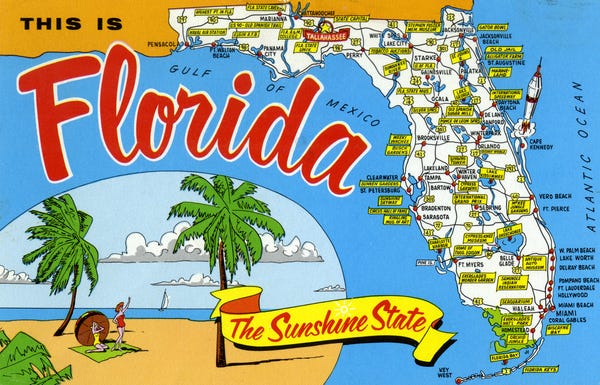
Florida is a lot more than Miami with all its glamour and crime. That image got catapulted into cliché with the popularity of Miami Vice, marking the beginning of the subgenre of Florida thriller/crime/adventure novels. Those kinds of stories originated in the 1960s with John D MacDonald’s Travis McGee series and the baton picked up by transplants like Elmore Leonard, who moved his stories from Detroit to south Florida in the early 80s. These books by the usual suspects like Carl Hiaasen and Randy Wayne White are fun reading, but there’s so much more to Florida settings and Florida writers. You can find lots of hidden treasures among Florida stories, and I’ll show you the ones I know about.
By no means is this an exhaustive listing, just what I know from my own reading and research. Even after living thirty-seven years in Florida, I know I’m going to leave out somebody, so feel free to fill in the gaps in the Comments. Sometimes I know just enough to be dangerous. Might be fun to share tips and observations, as well. This essay is for both readers who want to explore Florida as a setting as well as writers who want to set a story here.
A little history helps with context. Florida resembles western states in that it was mostly wild territory that didn’t see much settlement until after the Civil War. While cattle ranchers set up shop in Colorado and Wyoming, cracker cowboys established organized cattle ranching in Florida around the same time. Raising cattle started when the Spaniards first explored Florida in the 1500s, and gathering feral cattle left behind made for the beginning of beef ranching in the Sunshine State in the 1840s. Florida supplied the Confederate army with beef and salt. The Union Pacific and Central Pacific railroads connected east and west with the first transcontinental rail line in May 1869 at Promontory Summit, Utah. Not long after that, Henry Plant on the Gulf coast and Henry Flagler on the Atlantic side started building rail lines to network Florida with transportation, Like everywhere else, the railroad accelerated development, moving freight and people.
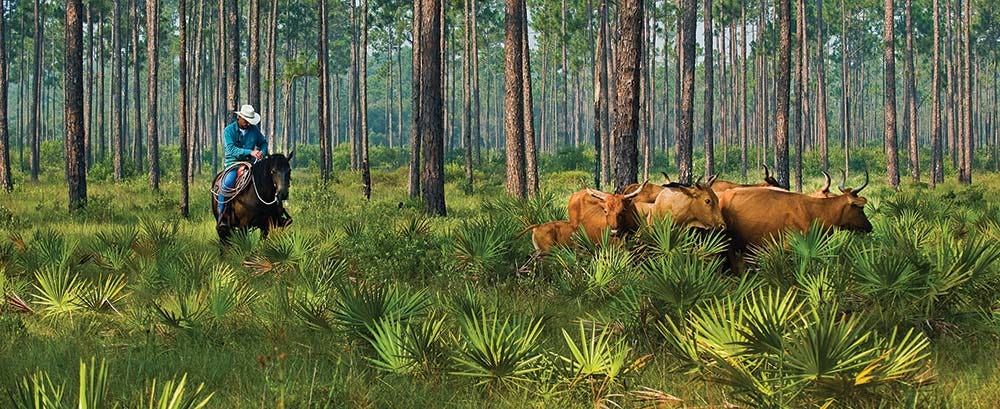
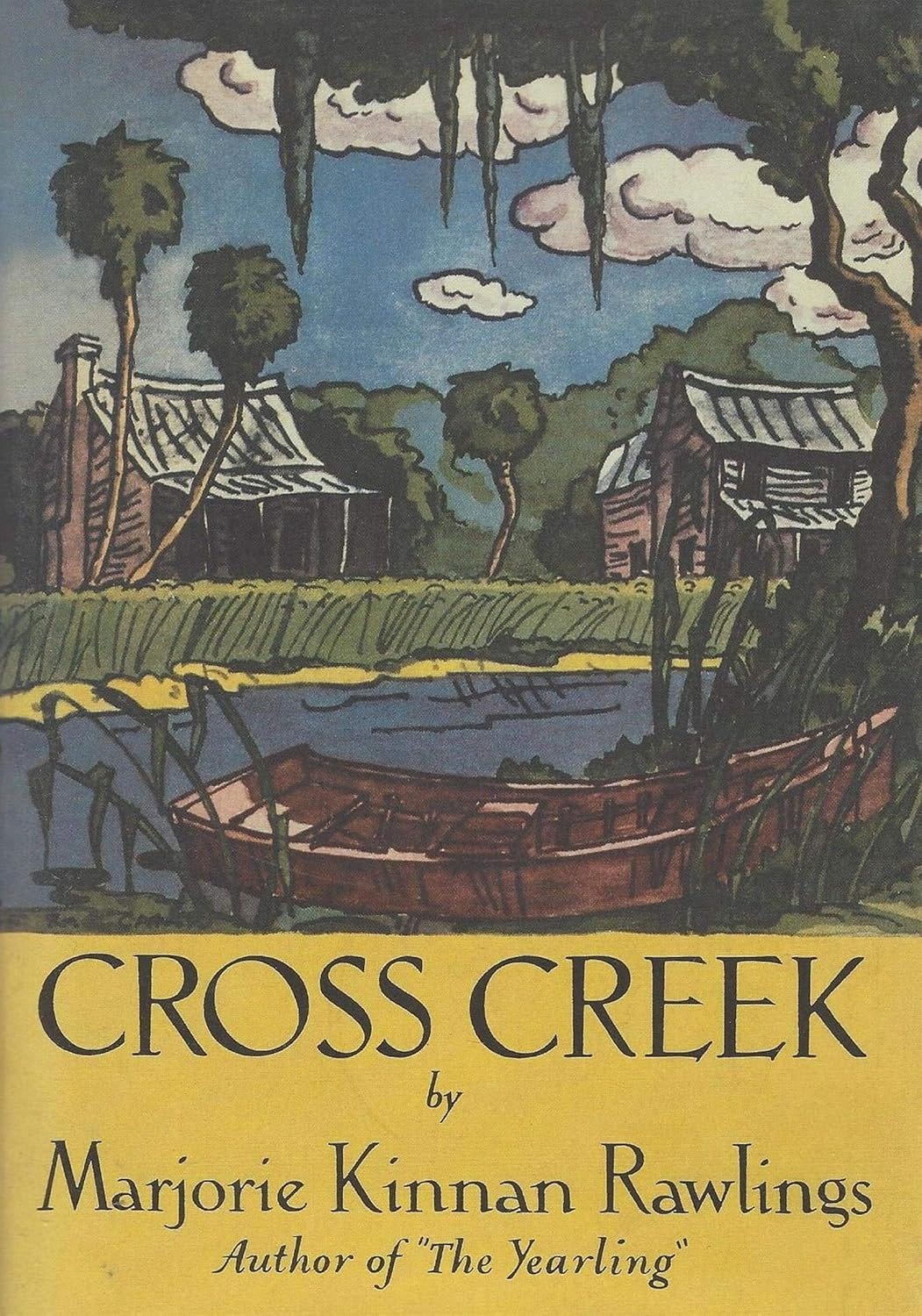
Marjorie Kinnan Rawlings wrote about this early pioneer era in the 1930s and 40s, and The Yearling and Cross Creek are part of the American literary canon. Another author worth a close look is Patrick D Smith, who wrote several novels set in pioneer Florida and included indigenous characters. His 1968 novel, A Land Remembered is a sweeping tale of three generations taming wild Florida shortly before the Civil War,
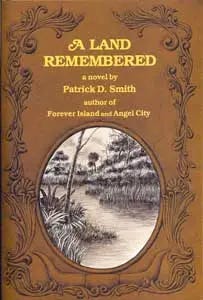
establishing cattle and citrus operations, acquiring and taming land. The novel shows the transformation from wilderness in 1858 to urban planning in the 1920s. My inner editor wanted to tweak dialog and plot, but overall, this novel is a good read, and its strong point is how it shows generations of one family settling, then transforming the land over a century. This novel is used as part of Florida public school history curricula.
If you like westerns, Pineapple Press of Sarasota has been publishing a line of Cracker Westerns since the 1980s. Along with the usual types of desperadoes, thieves, and rustlers, they feature Cubans instead of Mexicans, Seminoles and Calusas instead of Apaches and Comanches. There’s also alligators, cottonmouths, rivers, and swamps, fewer canyons and arroyos, no desert, but plenty of palmetto thickets, snakes, and more insects than you’ve ever seen.
Florida is a Southern state, although with the huge number of northern transplants: New Yorkers down the Atlantic coast and Midwesterners on the Gulf coast, it’s sort of upside down. To experience Florida as part of the South, you need to look in the northern areas and deep inland. Jacksonville in the far northeast corner has been called Georgia’s southernmost city, we have the Redneck Riviera along Pensacola’s beaches, and I can personally testify to the high density of new York and New Jersey transplants in West Palm Beach.
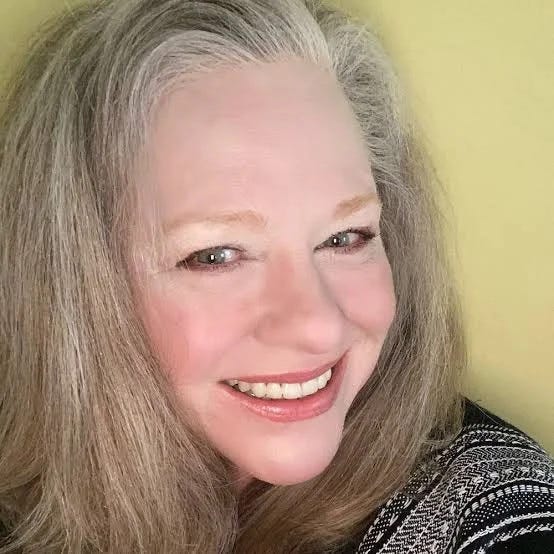
A number of authors write Florida as a Southern state and do an excellent job of capturing the unique feel of this place and its people. Connie May Fowler is one of the first to come to mind. For those who haven’t read her, start with River of Hidden Dreams, set in and around the Ten Thousand Islands off of Ft Meyers. The opening paragraph of this novel has the best narrative hook I’ve ever seen. Her Before Women Had Wings hit big in the 1990s and was adapted to a TV movie. Other very noteworthy titles include Remembering Blue, The Problem with Murmur Lee, and the memoir, When Katy Wakes. A native born Floridian, all of her fiction is set in a Florida never depicted in tourist brochures. She’s been flying under the radar for too long, so look up her novels and try them out.


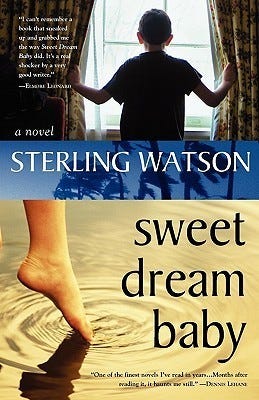
Sterling Watson grew up in Nebraska, went to college in St Petersburg, and stayed to make an academic career at Eckard College. He and Dennis Lehane have collaborated on screenplays and together run the Writers In Paradise conference. His early novels like The Calling and Weep No More My Brother from the late 70s into the 80s are literary fiction with a clearly Southern setting in Florida. He’s written some thrillers set near the Everglades, like Deadly Sweet, but his more recent literary novels are the ones that shine. Sweet Dream Baby is set in the panhandle in the 1950s, a very dark Southern Gothic and well worth reading. Night Letter is a sequel, but I haven’t read that one yet. Later novels like Fighting in the Shade and Suitcase City are contemporary stories set in Florida as a Southern state, including football culture as a plot driver. The Committee is set in 1958 Gainesville, based on historical facts of the Johns Committee, a governmental body dead set on rooting out communists, subversives, and homosexuals. It’s a nice mix of the pastoral 50s clashing against McCarthy-ish Cold War paranoia.
Thinking of literary writers and academic settings, Harry Crewes spent a lot of time in Gainesville, writing a lot of Southern Gothic, and we could credit him with inventing the Rough South. Many of his novels are set in fictional Mystic, Georgia, as opposed to Florida, but there’s no leaving Crewes out when talking about Florida writing and the South.
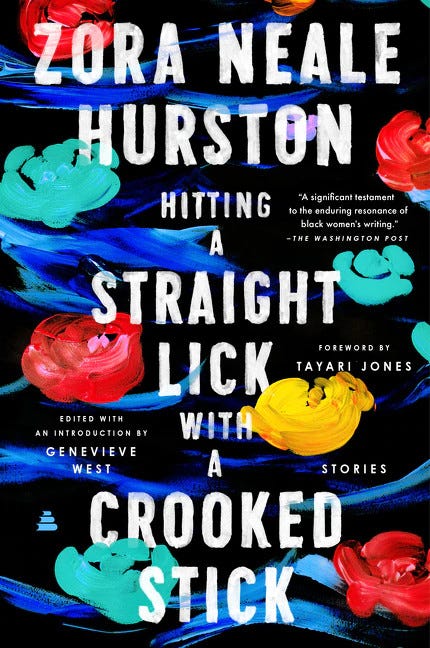
Zora Neale Hurston might not have set much of her fiction in Florida, but she deserves mentioning, because she made a huge mark in American literature. She was a major player in the Harlem Renaissance and grew up in Eatonville, near Orlando. The short story collection Hitting a Straight Lick With a Crooked Stick has some Florida stories. She worked in the Florida Writers Project, part of the depression-era WPA from 1939, collecting folk songs and stories in Florida and making audio recordings.
Other noteworthy novels set in Florida, but not necessarily written by Floridians include: Coleson Whithead’s The Nickel Boys, Stephan King’s Duma Key, Peter Mattiessen’s historical Florida novels: Shadow Country, Killing Mr Watson, and Far Tortuga. Florida by Lauren Groff is another dark novel. These authors did their homework.
Before departing the topic of Florida as Rough South and historical, we need to consider Kent Wascom. His big breakthrough came as the Woolsack family trilogy: The Blood of Heaven, Secessia, and The New Inheritors. Teenage runaway Angel Woolsack joins a group of highwaymen in The Blood of Heaven in West Florida, territory recently acquired from the Spanish and French, and he cashes in on the slave trade to build a business empire. Wascom likes to use West Florida and the panhandle as a setting and returned to it in his dystopian The Great State of West Florida. His writing compares to Cormac McCarthy with the violence.
The Latino experience in Florida runs very deep, and Jose Yglesias wrote about that experience in several novels: A Wake in Ybor City, Tristan and the Hispanics, Home Again, and Break In. These novels are set in Tampa, good to very good reading, and his other works are set in revolutionary Central America, plus his ancestors’ homeland of Galicia, Spain. There’s gobs more Hispanic authors like Patricia Engel, Richard Blanco, Anjanette Delgado, and Ivonne Lamazares. I confess that I haven’t read them.
California gained a reputation for being the weird state in the 1960s, but since the 1980s, Florida has been giving the Golden State a run for its money. Drawing from Florida’s topography of swamps and tangled forests, writers like Karen Russell have given us the novel Swamplandia, plus the story collections St. Lucy’s Home for Girls Raised by Wolves, Vampires in the Lemon Grove, and Orange World and Other Stories.
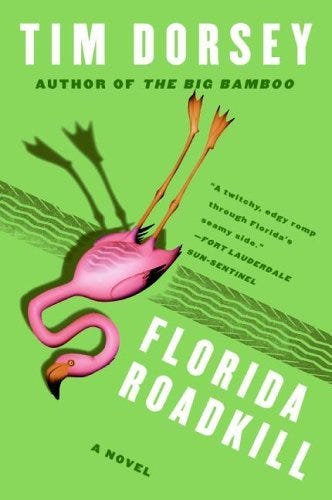
Circling back to the familiar subgenre of Florida crime and thriller stories, plus a little weirdness, take a look at Tim Dorsey’s series featuring antihero Serge Storms and stoner sidekick Coleman, beginning with Florida Roadkill, and progressing through the 26th and posthumous title, The Maltese Iguana. If you’ve not heard of Carl Hiaasen, I kind of feel sorry for you. He more or less invented the subgenre.
If you like your crime more hard-boiled, look to Ace Atkins and his White Shadow, set in 1955 Tampa against the unsolved murder of gangster kingpin Charlie Wall. Tampa in the 1920s through the end of the 1950s is a great setting for hard-boiled crime. Jacksonville in the 1980s through now is another good setting. There’s also Charles Willeford’s novels about Miami PD detective Hoke Mosely. Miami Blues came out in 1984 and the movie version hit the screens in 1990.
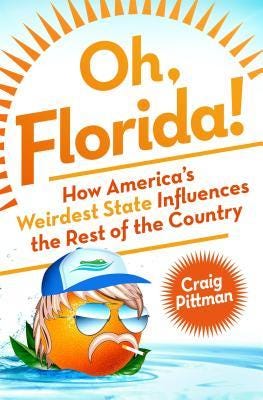
In the nonfiction realm, journalist Craig Pittman is the expert. He’s written numerous books about Florida culture and history. If you’re researching Florida, then you need to look at his books like Oh, Florida!, The State You’re in, and Welcome to Florida. Pittman’s family has been in Florida for generations, and he spent thirty years writing for the St Petersburg Times. Now he writes for the Florida Phoenix.
There we have it, my limited sampling of Florida writing for anybody interested in this place. It runs the spectrum from pioneer: Cross Creek, A Land Remembered to Southern: River of Hidden Dreams, The Committee to Cracker Westerns to Latino: A Wake in Ybor City and just plain Weird like Swamplandia. There’s more to Florida than Miami Vice, and maybe you’ll find some satisfying reading and research in there.
Connie May Fowler is new to me, and I've added "Before Women Had Wings" to my TBR list. Thank you for the recommendations. You had a lot of good writers there.