
Childish Things
A fortysomething attorney who plays with toys, short story, 4900 words

The counter girl eyed him: this kind of thing didn’t happen at her McDonald’s. Bob had ordered a cheeseburger Happy Meal, something a lone fortysomething man in pinstripes, white shirt and tie just doesn’t do in downtown Charlotte under broad daylight.
Bob put her quizzical expression out of his mind as he counted out exact change and took his tray to a single booth. The lunchtime crowd had filled most of the seats, the patrons too occupied with their own hurried meals to notice the brightly colored box on Bob’s tray. He opened the half pint of milk and unfolded the top of the Happy Meal box to peer inside.
Next to the single cheeseburger and fries, wedged under the cookies sealed in cellophane, lay a small yellow biplane with a cartoon character in the cockpit, the exact toy he had wanted. Bob wore a smile as he pulled out his food and unwrapped the cheeseburger.
Halfway through the meal, he could wait no longer and plunged his hand inside the box for the small airplane. He tore its plastic wrapper open and set the toy on the table in front of him. The plane rested on tiny black wheels, and Bob turned the orange propeller with his finger while the miniature cartoon pilot smiled approval. He absently nibbled at his cheeseburger and fries as he pushed the airplane around the table with his free hand.
Bob didn’t always eat Happy Meals for lunch, but the urge had been gathering within him all through this difficult week. His job as corporate counsel often meant oppressive responsibility, but that wasn’t the part that troubled him. He wasn’t sure exactly what had been bothering him, but he felt positive that the little yellow and green biplane worked to make him feel better. His smile broadened as he pushed the small toy in a figure‑eight across the Formica table.
His first Happy Meal had come with a red fire engine, the tiny toy truck taking a place of honor on his nightstand next to rubber figures of the Hamburglar and Mayor McCheese. The Play‑Doh that had come from another restaurant’s child’s meal sat in a drawer in his china cupboard so he could make shapes at his dining room table.
Enough taxiing. Bob lifted the airplane by its tail and sent it into aerobatic maneuvers over the remnants of his french fries and empty milk carton. For a moment, the din of the crowded room, the pressures of million dollar deals that balanced on single words, and the responsibilities of making a living all vanished as he enjoyed the simple pleasure of sending the toy airplane on barrel rolls and loop‑the‑loops.
Bob sensed eyes on him and glanced up to see two children at an adjacent table watching. They gaped, fascinated that a man too old to be their father could play their games with such skill and abandon. Between the children sat their mother, an arm around each child as if to protect them from bandits. She also watched Bob, eyes narrowed in apprehension, face pale and pinched.
Bob swept the airplane into his pocket and took his tray to the trash can. He needed to get back to his office.
The first Happy Meal had happened almost a year earlier, an impulse just like the fuzzy bear. The Tonka trucks, various Hot Wheels cars, and the Lil Tykes dollhouse had all been deliberate. Bob couldn’t explain why. He just knew they made him feel better, and he kept them in a corner of the living room in his small house, where even his dog, Butch, had stopped giving them inquisitive sniffs as he patrolled the household.
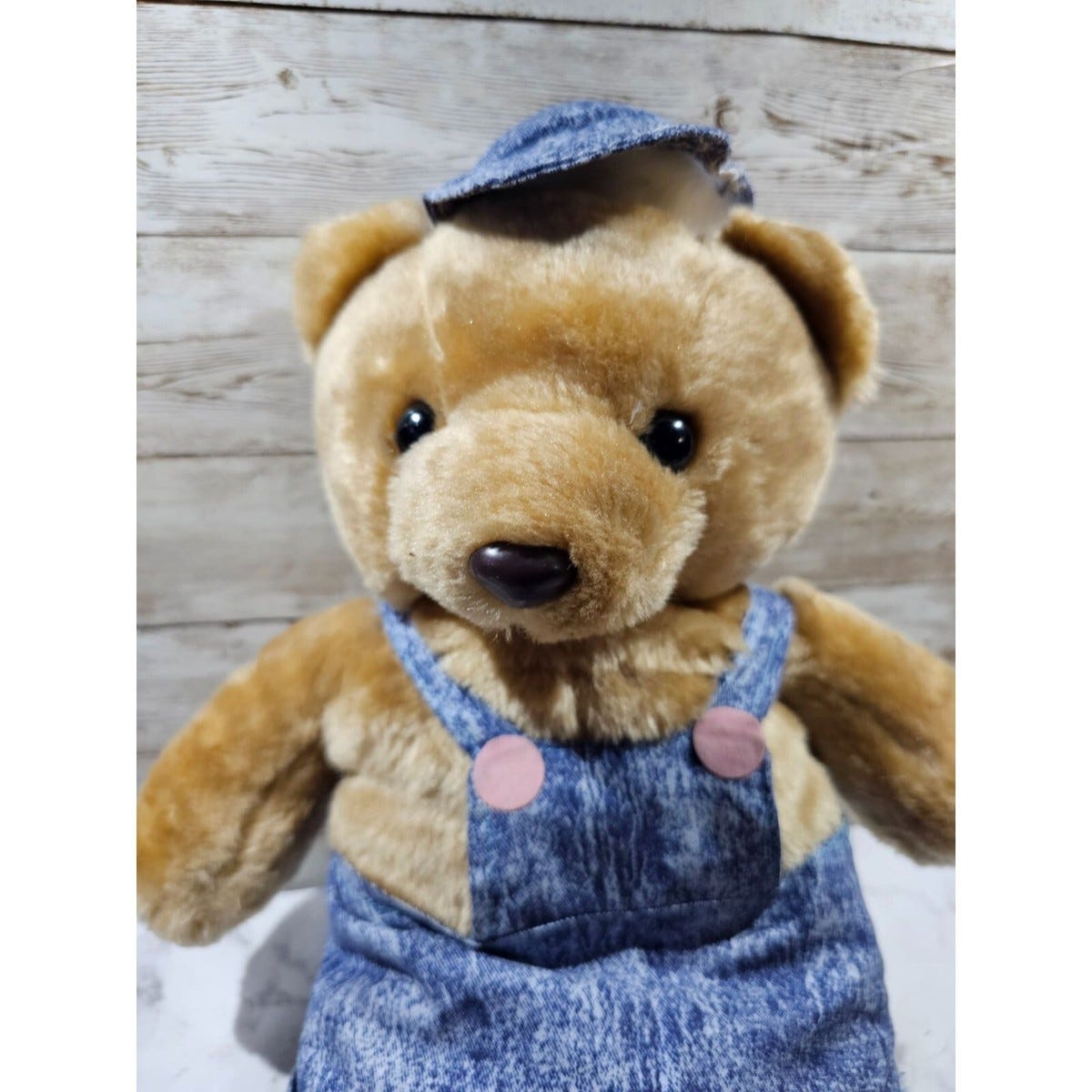
Bob had named the bear Fuzzy Bear, not very original, but somehow the name’s simplicity expressed the comfort he gained from his companionship. The toy had been on a promotional display at a discount store, and Bob had found himself staring into a pair of button eyes, his feet refusing to move him or the shopping cart any further. That had been the Saturday after the first Happy Meal. Fuzzy Bear stood about a foot and a half tall inside an open cardboard frame, a cap set askew on his head, wearing corduroy overalls and blue sneakers. He stretched his arms wide within the confines of the cardboard cage, as if ready to give a hug to the first person gracious enough to accept. Bob lifted the bear from the display and held him long enough to stroke the soft brown fur near his ears. He placed Fuzzy Bear in his cart and finished shopping.
Since then, Fuzzy Bear lived next to Bob’s pillow. Bob hadn’t planned on it and had little experience with these things. He had fragmented recollections of a tattered toy rabbit – all his mother could afford – and it must have become lost in one of their many moves. So many memories from those days had grown faint and weathered.
Work occupied and defined Bob’s life, and he had lived this way for so long that he knew nothing else. His widowed mother had worked two and three jobs to support the two of them because nobody but the Company got rich in a coal mining town. She had a habit of reminding him often, when she wasn’t scolding him for being lazy and neglecting household chores. To prove his worth with a paycheck, Bob joined the workforce younger than most, starting as a paperboy.
An overstuffed file folder of contract law now lay on his desk, awaiting his attention. Bob took the yellow airplane from his pocket and flew it into his briefcase for a soft landing atop today’s Wall Street Journal. He closed the briefcase because the toy seemed to beckon to him, the cartoon pilot’s smile too inviting. Lunchtime was over, and he had to work. Bob immersed himself into the detailed minutiae of business law. Oblivious to the calls of young birds learning to fly from the trees just outside his window, he analyzed the terms and conditions of a potential acquisition. Sunset came and went with no notice beyond his lighting the desk lamp when the sun’s rays turned too thin a yellow to allow him to read.
The office building had largely closed for the day when he tucked a few documents into his briefcase for later reading and switched off his lamp. Seven‑fifteen had come and gone again as it had so many evenings. Dinner was pork chops and black‑eyed peas. He had left the dried beans to soak in a pot since all day yesterday, and they needed little more than heating. His mother taught him that, and the wisdom that dried beans cost only a fraction of anything that came in a can. Bob finished his dinner and gave Butch the bones. Nothing going to waste.
Bob let the dog out for a last run in the back yard, and he watched Butch run back and forth along the fence, his mongrel with short legs making a mirror image of the neighbor’s collie as the two raced along the chain link border between the yards. The dog’s business done, Bob locked up, undressed, and climbed into bed, Fuzzy Bear tucked into the crook of his elbow.
After breakfast, he scanned Saturday’s Charlotte Observer, then pulled a Tonka dump truck from the corner collection. Sitting on the floor, he rolled the truck through an imaginary strip mine to pick up another load. Daddy had worked the mines until the accident took him, but Bob was too young at the time to remember the details of his father’s face. Daddy had become more of an idea than a real person, someone his mother only reluctantly talked about, a wound still sore and better left alone.
Bob didn’t realize he was making truck sounds, deep throaty rumblings of powerful diesels, until the doorbell interrupted him. He left the truck and its imaginary load of coal in the middle of the carpet to answer the door.
“Hate to bother you on a Saturday, but this just came in Fed Ex.” George, Bob’s business manager proffered a thick envelope. His golfing gloves peeked from his hip pocket. “You need to look at their proposed terms.” The breeze tugged at a lock of his gray hair.
Bob nodded and took the envelope, its plastic material slippery against his hands. He pushed the door open wide. “Coffee? I got a fresh pot.”
George smiled thanks and followed Bob to the kitchen table. Bob poured coffee and peeled the envelope open. As he read through the documents and files inside, George’s gaze wandered toward the living room. “You have company?” he asked.
“No.” Bob’s eyes remained on the papers as he took his seat.
“There’s a toy truck in your living room. Thought maybe you had a nephew visiting.” George shrugged and sat.
“Just me.” Bob glanced up and reached for a pencil. He jotted notes in the margins. Butch walked under the table and rested his chin on Bob’s thigh. He stroked the dog’s head. “And Butch.”
Butch’s tail thumped against the floor and George bent to see the dog. He looked at the truck again and frowned. “Whose toy truck is that?”
“Mine.” Bob resumed scanning the file and jotting notes. George pulled his face into a smile, the one he wore around difficult customers. “What are you doing with a Tonka truck?”
“You can play with it.” Bob’s voice came as little more than an absent murmur as he flipped pages in search of the right paragraph and subsection.
George reached across the table and put his hand on the papers. “You’re playing with toys?”
Bob looked up at George. “They’re mine.” And better built than those he remembered seeing in store windows during his childhood.
“Chrissakes.” George shot a glance at the bright yellow Tonka truck in the living room. “Do you know how this looks?”
Bob glanced around the room, then let his eyes settle on George. He didn’t see any problems beyond those in the counterproposal.
“Aren’t you a little old for those things?” George put his smile back on for a moment.
Bob returned a blank look. “You wanted me to look at this, right?” He hefted the stack of paper and purple Fed Ex envelope.
George turned to face Bob square and leaned on his elbows. “You’ve worked for me close to eleven years, Bob, and I’ve never seen a more capable, thorough attorney.” His eyes searched Bob’s face. “But if you’re playing with kids’ toys, maybe it’s time to see someone.” He raised his eyebrows and waited.
“If you think I’m stealing from the neighborhood kids, you’re wrong.” Bob leaned on his elbows. “I bought them with my own money.”
“That’s not what I’m saying.” He stole another glance at the toy truck. “This isn’t normal, and I don’t want you cracking up like some postal worker or something.”
“George, I work hard.” Bob put his arm around the papers as if to guard them. “And I’ve always given you my best.”
“Yes, you always have.”
“And I spent my Army days in Alabama, not Vietnam.” Bob looked George straight in the eye. “Why would you think I’d do something terrible?”
“It’s just that – “ George seemed unable to put the words together and pointed instead to the Tonka truck and Lil Tykes house on the living room carpet. “Picturing you playing with toy trucks is more than a little weird.”
Bob cocked his head at an angle. He didn’t follow George’s reasoning. Surely even George must have played with trucks at one time or another.
George held his hands up, then folded his arms across his chest as he turned aside. “It’s not like you dress up in women’s underwear or anything really sick.” He looked at the truck and at his feet, but he didn’t look at Bob. His voice turned quiet and small, as if he were ashamed of his words. “You playing with kids’ toys makes me wonder if you’d like to do other things with kids.” He turned furtive eyes toward Bob.
Bob furrowed his brow. “I don’t do anything with children.” The idea of playing with his Tonka truck among children had never occurred to him.
George studied Bob’s face, then pursed his lips. “It’s not right.” He waved his hand at the toy truck. “Maybe you need some help. The bank has a doctor on retainer.”
Bob knew what that meant. The employee assistance program referred workers to a psychologist, those who were alcoholic, hooked on drugs, or beat their wives. He was none of those, and besides, most of those going to EAP ended up fired. Bob didn’t want to lose his job. Mama had taught him that decades ago; only shiftless no‑accounts get fired. “I’ll take care of this myself.”
“I’m not talking about the proposal.” George looked him in the eye. “I’m talking about that.” He swung his finger toward the living room.
“I know. I’ll take care of it.” Bob picked up a document. “Have I ever let you down or broken a promise?”
“No.” George’s face relaxed and he uncrossed his arms.
“I’ll have this summarized and on your desk Monday morning.” He tapped the thick stack of papers. “The toys will be gone next week.” Bob looked George in the eye as if taking an oath.
After George left, Bob carried the documents to his desk. Along the way he stopped to put the dump truck back in its corner. He felt troubled because the toys had upset George. To Bob, they were just a diversion. He never had a Tonka truck as a boy because Mama never has enough money. With his steady income and inexpensive two‑bedroom house paid off, Bob had thought he was free to buy toys. He could afford them now.
Mama had been so stern about their tight budget. Food, shelter, and sturdy clothes always came first. Anything else was a luxury, something only other people could afford. He had spent his summers barefoot to save his shoes for school. That practice ended when he enlisted after graduating high school. The idea that the Army would give him another set of boots just because he wore his out had struck Bob as extravagant and odd. A wizened sergeant once caught him patching a worn sole with cardboard and cussed him all the way to the quartermaster for a new pair.
Mama did give him a Bible for his sixteenth birthday, a red‑letter edition whose cover zippered shut, something she had been saving to buy since he started school, because she always put a lot of credence in Scripture. He still had it, carefully preserved over the years, and still read it Sundays after church.
Bob looked wistfully at his toy trucks, the big, yellow Tonka, the Lil Tykes car and dollhouse, and the Lil Tykes people, the size and shape of hard boiled eggs, round and happy. Perfect for a toddler to clutch in a little fist. Bob had spent many peaceful hours acting out idyllic domestic scenes in the toy house with its four rooms, swingset, and merry‑go‑round in the back. Sitting on the carpet Saturday mornings and playing with the toys brought him a sense of peace and ease that he found no place else. He entered a world where daddies never had accidents and Mama always had enough so they could eat well and have time to play.
But George had more than hinted that the toys jeopardized Bob’s position. He couldn’t lose his job because he had to work and earn his keep – Mama’s words. Only lazy people got fired, and Bob had spent his life proving he wasn’t lazy.
The idea of having to give up his toy trucks pulled at Bob’s gut until he remembered something Mama had read to him while they waited for the bus that would take him to Ft McClellan and basic training: When I was a child, I spake as a child, I understood as a child, I thought as a child: but when I became a man, I put away childish things. Paul’s words to the Corinthians had been her way of telling him that he was no longer a boy. Only boys played with Tonka trucks, so they had to go.
Later that afternoon as Bob organized his findings and began writing his summary for George, he tilted his head down to ask Fuzzy Bear a question. Fuzzy sat tucked under his arm, black button eyes staring blankly at Bob’s work. Bob knew the bear wouldn’t answer out loud, but he still liked to ask for his opinion. With Fuzzy Bear as a silent partner, Bob felt comfortable. He wasn’t alone.
He watched the bear as if listening, then proceeded with his work. Fuzzy Bear often ventured from Bob’s room for consultations, or to keep Bob and Butch company in front of the TV at night. Fuzzy Bear also tagged along when Bob had to fly on business, safe and warm amidst the socks in the suitcase.
Fuzzy’s silent counsel helped Bob finish the summary so he could spend Sunday resting and not working. Bob gave the bear a hug to say thanks and went to bed.
After church services, Bob asked a few questions and found out that the congregation supported a prison ministry, and yes, they’d be delighted to accept donated toys for inmates’ children. This was normally a Christmas effort, but Bob pointed out that children have birthdays all year round and promised to bring something next Sunday.
In his living room that evening, he boxed each toy and wrapped them in colorful birthday paper. He had taken very good care of them, not even scratched the paint. The boxes stood in a neat stack, each tagged to indicate what lay inside, waiting for next Sunday.
Monday began with a happy George thanking Bob for his weekend work. His voice carried only a trace of Saturday’s unease, as if he had seen something embarrassing in the living room. Bob’s analysis of the counterproposal meant they could stop negotiating and sign the contract.
“You’re helping me close this a month ahead of schedule.” George chuckled. “I don’t know where you get your eye for detail, but don’t lose it.”
Bob didn’t tell him it was as much Fuzzy Bear’s credit as his for finding the details because George would never understand, but with making the boss this pleased, Fuzzy’s job as consultant would stay secure.
“And the other thing from Saturday,” Bob said. “I’m donating them. They’re gone.”
George’s face sobered. “Good.”
“I have better things to do, like keep up with the trades.” Bob touched the cover of a banking magazine and smiled.
George’s smile came back. “Good to hear you put it behind you.”
Later that week, while grocery shopping, Bob noticed a row of toy fire trucks stacked over the dairy case. The trucks built from sturdy plastic, almost as big as his Tonka dump truck, and they had a ladder that swung up and extended. Bob stared at the cardboard cartons, each with openings cut into the sides to show off the fire engine within. He took one down and studied its details, a simple truck, no batteries or electronics to interfere with the imagination.
But he had just wrapped his trucks and Lil Tykes toys for donation. He couldn’t take this home to play with it, that would break his promise to George and cost him his job. His hands refused to put the truck back. Sweat began to bead on his forehead, and he felt very warm amidst the chilled milk and butter. Bob’s hands began to shake as he attempted to will the box back to where it came from.
Just as quickly as the impulse to take the box, a new idea arrived. He didn’t have to play with the fire engine, not even remove it from the carton. This one could go directly to charity. Bob liked the idea and placed the toy in his cart, then picked out a dozen eggs to finish shopping. At home, this truck proved easier to wrap because he imagined some other boy playing with it, gaining a satisfaction Bob knew from personal experience with his yellow dump truck.
The people with the prison ministry thanked Bob for his donation, and he returned the following week with two more packages wrapped in colorful birthday paper, more items that had somehow found their way into his shopping cart.
Bob invited George and his wife out to dinner that Friday and ended the evening at his house with dessert and drinks. He felt pleased that George could see that no toys lurked in his living room, the incident consigned to the past.
The adjustment to Saturday mornings without the trucks or the Lil Tykes dollhouse felt difficult at first, but Bob made good on his promise to keep up with his reading. Fuzzy Bear helped, sharing Bob’s lap and reading along as they kept abreast of the banking and finance business news.
Fuzzy Bear remained the sole holdout, because he had a very important job. Long ago Fuzzy’s position in the household had grown to where Butch would bring him to Bob without being asked. The dog seemed to know when Bob needed his friend and sounding board. Fuzzy Bear had already begun to advise Bob on which toys to buy and donate next. Always polite, he waited for Bob to bring up the subject first.
As winter settled into Charlotte, and the weather turned cold and wet, Bob traveled to Atlanta for a conference. The temperature hovered at just above freezing, and the murky overcast took that as the cue to begin raining. Bob spent his evenings in his hotel room studying and consulting with Fuzzy Bear, who had learned a great deal about Bob’s work from their time together. Bob felt thankful for his company.
During the taxi ride from the hotel to Hartsfield International Airport, the first leg of the journey home, Bob wiped fog from the inside of the window glass. He wished he was already home in Charlotte, warm slippers on his feet, hot chocolate in a mug, and Fuzzy Bear tucked under his arm for company.
Deep in a pedestrian tunnel connecting the concourses and sheltered from the dreary gray sky and penetrating, chilly wind. Bob carried his valise in one hand, briefcase in the other. The travel agency had booked him on the last flight to Charlotte, and it would be late when the plane touched down.
The air inside the tram that shuttled passengers out to the midfield terminal hung damp and stale in the crowded car, stagnant and musty from the wet weather. As he herded off the car with the other passengers, Bob heard a child’s anxious voice and looked. A small boy stood in the midst of the moving crowd on the landing like someone stranded on a rock in the middle of a torrent. The boy’s face shined slick with tears and his lower lip quivered as uncertain eyes searched the crowd.
Bob turned and worked his way upstream to the boy. He knelt to see him better. “Is something wrong?” The boy looked about seven, gangly arms and legs already outgrowing his worn hand‑me‑down clothes.
“I’m lost.” The boy wiped his eyes and continued searching the crowd. “I got off the train and my mom didn’t.”
“Are you supposed to be taking a trip?”
He shook his head. “I want to go home.” He took a deep breath, heavy with hitches.
“Do you live here in Atlanta?”
He nodded, lip quivering again.
“I’ll help you.” Bob patted his shoulder. “How about I take you to a policeman so your mom can find you?”
The boy looked at him, surprised at the unexpected aid.
“It’s OK if I help you?”
The boy nodded, his tears stilled, and he sniffled.
Bob handed him his handkerchief. “My name’s Bob. What’s yours?”
“Tony.”
“Glad to meet you, Tony.” Bob shook the boy’s hand. “Blow your nose.” He smiled, and Tony smiled back, no longer alone in this big airport. Bob pointed at the automatic doors. “We’ll take the next train back to the main terminal, OK?”
“OK.” Tony nodded and took Bob’s hand as they walked to the doors. The small hand felt alien to Bob, so accustomed to routine adult handshakes that he had forgotten what a trusting touch felt like. Tony’s hand nestled small and warm in his. That somebody thought him important enough to hold onto made Bob feel the same as those times when Fuzzy Bear listened especially close. Little Tony may have temporarily lost his mother, but he wouldn’t lose Bob.
In the main terminal, Bob pointed toward the Airport Security office and led the way to a counter where a uniformed man stood. Tony’s eyes widened at the sight of the high counter and the tall airport cop. Bob lifted him up to sit on the counter where he could be as tall as the men.
“This is Tony, and he’s lost,” Bob said as an introduction. “He got separated from his mother on the tram.”
The airport policeman asked to look at Bob’s tickets and drivers license. He had silvery hair and deep lines in his face that moved around as he smiled at Tony. “Let’s see if we can get her and you back together.” His face reminded Bob of a favorite neighbor from years ago. Had this man been wearing coal‑grimed coveralls and a hard hat instead of a white shirt and badge, he could have been Mr Barclay. “Where do you live, Tony?” The telephone rang and he picked it up. The policeman ran his eyes up and down Tony and smiled again. “Matter of fact, ma’am, a passenger just brought him here.” He jotted on a clipboard and hung up. “Tony, that’s your mama. She’s coming to get you.” The cop winked at Tony, his creased face and slow drawl just like Mr Barclay.
Bob patted Tony’s knee. “I have to go and catch my plane.” He glanced at the clock and saw that he’d miss it if he lingered. “And I better get moving.” He picked up his valise.
Tony clutched his arm. “Don’t go, Mr Bob.” His face turned pale as his earlier composure faded.
“I have to get on my airplane and go home.” Bob wished he had more time. Tony had been his first real encounter with a child, and he was a good kid, but the next flight home would be at 6:30 in the morning.
Tears gathered in Tony’s eyes. “I don’t want to be alone.”
“You’ll be OK.” Bob patted his arm. “Your mom’ll be here soon.” He tried to back away, but Tony’s grip tightened.
“I’m scared.” His lip began quivering and the sobs returned.
Bob held the crying boy, wishing he knew better how to comfort him. He felt powerless, and Tony’s frightened face reminded him too much of another little boy who also didn’t like being alone, but never had much choice in a coal mining town where only the Company got rich.
He remembered his valise and swung it onto the counter. As Tony clung, Bob worked a zipper open and reached inside. His fingers touched fur, then he drew Fuzzy Bear out into the fluorescent light of the airport.
Tony’s eyes found the bear, and he gazed with wide eyes at the cap set askew on the fuzzy head, corduroy overalls, blue sneakers, and arms held wide, as if ready to give a hug to anybody gracious enough to accept it. His sobbing stopped.
“This is Fuzzy Bear.” Bob handed the toy to Tony. His mouth felt dry and his heart beat too fast. He looked into the bear’s button eyes and understood that somebody needed Fuzzy more than he.
Tony reached for Fuzzy, a smile spreading on his face. He looked into the bear’s eyes, then let go of Bob to hug Fuzzy Bear tight to his chest.
“He’s a very special bear,” Bob whispered into Tony’s ear. “He’ll listen to anything you want to say, and he always understands.” His words carried the authority of experience.
Tony looked over Fuzzy’s shoulder at Bob and nodded.
“As long as you have Fuzzy Bear, you’ll never be alone.” Bob nodded at Fuzzy as if he would join in with an agreeing word.
Tony looked at Fuzzy as if he had heard an answer and hugged the bear again.
“You OK now?” Bob asked. He still had time to make his flight, but not much.
The boy squeezed Fuzzy Bear and smiled. “I’m not lost any more.”
“I have to go.” Bob patted Tony’s shoulder. “You mind the policeman, and your mama will be here soon.” He closed his valise and waved at the cop as he stepped away from the counter and walked to the tram.
Bob felt a twinge in his gut as the tram’s doors hissed shut. Fuzzy Bear wouldn’t be with him tomorrow morning to share the morning newspaper. He’d have to make do without his small, furry friend with the black button eyes. He missed Fuzzy already, but in his silent way the bear had told Bob that he had done the right thing. As Bob rode toward his concourse, he made plans to start volunteering to deliver the toys he had been donating. He could do a lot of things to help people like Tony. Something Fuzzy Bear had been telling him lately.
You might also like this
Or maybe this